October 30, 2021

My Gram – Grandmother Scribner

My Gram, Theresa Eugenia Gordon Scribner, known as “Jean”, was born in Brooklyn in 1888, the fourth child of John Calvin Gordon and his wife Helen King Gordon.  Her mother was the daughter of Irish immigrants.  John was a carpenter in his younger years, and a local Brooklyn, New York builder by the time that Jean was born.  The couple had six children between 1883 and 1902.   In 1912, at the age of 24, Jean married Henry “Harry” Dickinson Scribner and they made a home in Brooklyn.
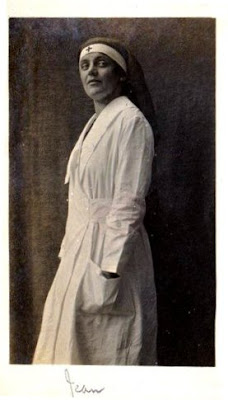
It was several years after they married before Jean and Harry’s first child, Virginia, was born.  In recent years, I have learned that Jean spent some of that time working as a nurse or Red Cross worker.  This was during the time of World War I, and I expect that many wounded soldiers were returning home for medical treatment.

My Gram was always quite proud of her early family history connections.  One Christmas I received a cute small purse that was made with the blue & green wool of the Gordon clan tartan – I still have it.  My brothers got Gordon tartan ties that same year.  Gram also knew that her grandmother was a Snedeker and that her Snedeker ancestors were early New York settlers in the Oyster Bay and Flatbush areas dating back to the 1600’s [see the blog posts for An Early Snedeker Immigrant, February 2021, and Echoes of a Past Epidemic, April 2020 for some of her Snedeker family history].

Jean’s mother, Helen King Gordon, died unexpectedly in early 1919, possibly from the Spanish flu epidemic, while visiting one of her daughters, Lillian, in Washington, D.C.  After that, Helen Marie, the youngest Gordon sibling, came to live with Jean and Harry for a couple of years until Helen married.

Jean and Harry had three children during their early years in Brooklyn, and later moved the family to a home in Huntington, Long Island.  In 1943, Harry died when my father was 19 years old.  Jean continued to live in their Long Island home for another 27 years.  Theresa Eugenia Gordon Scribner died in late 1970.
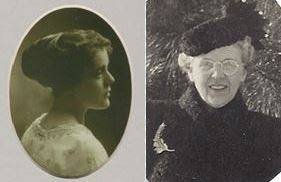
 

My memories of my Gram were limited because as a military family, we never lived near New York.  There were always phone calls with my parents, and occasional trips to New York to visit, probably over the holidays or summers, and several times that she came to visit us when we lived in Florida, Arizona and New Mexico.  I remember her lovely home, a grandfather clock sticks in my mind, and also big holiday meals, Thanksgiving, Christmas or both in her dining room.

Gram was always quite proper, and we usually had to do a lot of spring cleaning before she arrived at our home for a visit; and then once she arrived, we had to be on our best behavior.  It sounds like she was difficult to get along with, and maybe she was, but I’m not sure that was really the case.  I remember that Gram was kind, and I think that everyone was just careful because we knew that she had high expectations for most everything in life, and my brothers, sister and I simply weren’t around her enough to be really comfortable with her.  

I always knew that Gram was a generous person.  Each birthday each of us would get a card with a little cash, and she would send each of my parents a generous check on their birthday with clear instructions that they were not to spend the money on family needs, but were instead to buy something special for themselves.  I remember that my mother would cash her check and then keep her birthday money in an envelope in her dresser.  Sometimes it would be months before she spent it.  I can remember shopping with Mom when she would decide to buy something with her birthday money – it was a real treat for her.

Another thing that my Gram very much believed in was for her granddaughters (she had 3 granddaughters and 7 grandsons) to know that we should always be willing to, and able to, support ourselves.  Good advice from someone who spent much of her life as a widow.  

*  *  *  *  *


Key Individuals:

     John Calvin Gordon  (1860 – 1945)

     Helen Teresa King Gordon  (1861 – 1919)

             Theresa Eugenia Gordon Scribner  (1888 – 1970)

             Henry Dickinson Scribner  (1880 – 1943)


Notes: 

I recently came across a note that Gram wrote to me in 1970 while I was in high school and living in New Mexico.  In the note, you can also tell that she felt the loss of our family not living near enough to see her very often.  I must have sent her a school picture.  It reads:

“Dearest Jane, Thank you for the darling picture of you, it is nice to have and see how you have grown up, very pretty indeed; if I may say so, without you thinking of me as a foolish proud Grandma, but I have missed the pleasure of living near enough to enjoy those early years... Take care of your parents and much love to all.  Gram”                                           

Another Gram story had to do with my desire to get my ears pierced in high school.  The answer was definitely not until I was 18 years old, and was accompanied with the comment that “Your Gram would roll over in her grave.”  And, yes, I had my ears pierced once I turned 18.

- Jane Scribner McCrary

October 15, 2021

The Grandfather I Never Knew

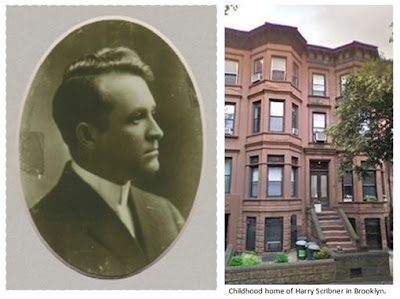
I’ve decided to stay with the family of my Scribner paternal grandparents for the next couple of blog posts.  My paternal grandfather died before my parents even met, thus I never knew him at all.  But I do know about him and will share some of that in this blog post.  Henry Dickinson Scribner, known as Harry, was born in the Mystic area of New London, Connecticut in 1880, probably at the home of his widowed grandmother, Mary Ann Brown Dickinson Hale.  

Harry’s parents were Captain David Alba Scribner & Virginia Augusta Hale Scribner.  Harry was David & Virginia’s second child, with an older brother, Wallace Flint Scribner.  Unfortunately, Wallace died of illness when Harry was only a year old.

After the loss of young Wallace, the family grew with the subsequent addition of two sisters Mary and Ella.  For the first 12 years of Harry’s life, Virginia and the children accompanied Captain David on his clipper ship voyages, also spending time with grandparents in Maine and Connecticut between trips.  The trade routes at the time were mostly between New York and San Francisco going south around the Cape Horn of South America.


In the 1890’s the decision was made to settle the family in Brooklyn, New York mostly so that Harry could begin formal schooling.  The family eventually moved to a brownstone home on Garfield Street in Brooklyn in 1894, and New York became the home port for Harry’s father, Captain David A Scribner. 

As a young man, Harry attended the Brooklyn Polytechnic Institute where he studied to become an electrical engineer.  He worked for New York Telephone Company for 40 years, as a Vice President in his later years. 

Henry Dickinson Scribner married Theresa Eugenia Gordon in 1912.  They lived first in Brooklyn, and then in 1929 the family moved to a new home in Huntington, Long Island.  Harry & Jean had three children – two daughters, Virginia and Jeanne, and a son Robert.  The children were all born in Brooklyn, and later Long Island became home.

My dad told the story that his father would bring home and install another telephone whenever a new model was introduced that he liked.  He said that they probably had a dozen phones in their house, at least one in each room!  One day when my dad was looking at the above photo of their home, he pointed out that there were lots of telephone wires running to the house.  As a benefit of Harry’s employment, the Scribner family didn’t have to pay for phones or phone service.  Even long distance calls which were quite expensive were free for the family, and that benefit continued for many years after Harry’s death until his wife, Jean, also passed on.

Harry Scribner had many interests. He was very active with local scouting organizations.  And he enjoyed sailing, boat building and playing tennis, as well.  Harry even built a clay tennis court in the back of their home in Long Island.  

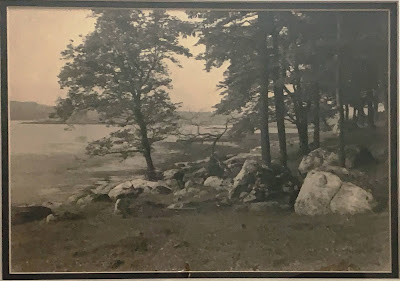
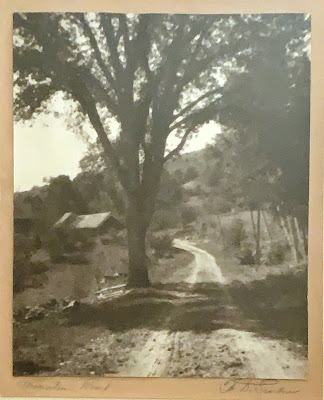
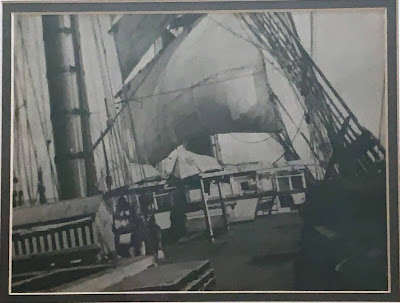
Harry was an avid photographer and was involved with both the Huntington and the Brooklyn Camera Clubs.  Several of his photos were even recognized at camera competitions, and at least one was accepted and hung in the Annual Exhibition at the Brooklyn Institute of Arts and Sciences in 1930.  Several of his photographic prints from that time have been kept in the family, I’ll share a few:


The son of a mariner, Harry always retained his love for the sea and frequently enjoyed sailing small boats and yachts.  My Dad remembers helping his father build 14-foot catboat in the cellar of the Long Island house when he was young.  According to my Dad, “It was built out of oak ribs and cypress planking, and believe me it was heavy. After it was built in one winter and caulked, we hoisted it out of the cellar by block and tackle.  We were lucky that our back door was opposite the cellar door so it was a straight shot outside after we had removed all the trim around the doors.  We almost had to grease it to get it through the doors.”  Harry shared his love for boating and the sea with all of his children, and they loved it as well.


Henry Dickinson Scribner died unexpectedly from a heart attack at 62 years of age when my Dad was only 19 years old.  Harry died before any of his 10 grandchildren were born, and I believe before he retired from New York Telephone.

*  *  *  *  *


Key Individuals:          

     Capt David Alba Scribner  (1840 – 1911)

     Virginia Augusta Hale Scribner  (1848 – 1940)

             Henry (Harry) Dickinson Scribner  (1880 – 1943)

             Theresa Eugenia Gordon Scribner  (1888 – 1970)

- Jane Scribner McCrary

September 30, 2021

An Artist in the Family

My last blog was about a somewhat recent time, that of my parents' generation, and included some of my memories when I was young.  I think I will stay with that time period for this blog post as well.

I was blessed with a diverse and loving extended family, however since we were a military family we never really lived near family members.  We mostly saw aunts, uncles & cousins on vacations and special visits.  My Aunt Jeanne, one of my father’s two older sisters, was quite talented and I would have loved living near her just to soak up some of her vitality and interest in art.  It seemed to me when I was young that she could do anything.

Jean Marie Scribner was born in Brooklyn in 1921.  She began spelling her name as Jeanne, however, as a young adult.  She grew up mostly in Huntington, Long Island and attended the New Jersey College for Women (later to become the Douglass Residential College - Rutgers University).  After college she worked for Good Housekeeping and later became an editor for the Ladies’ Home Journal of New York.  In 1949, Jeanne married Thomas Harrell Cashin and the family grew with the addition of their three boys.

With boys in the family to keep up with, it is no surprise that Jeanne was athletic.  I remember her as tall and very statuesque.  Family holidays were often spent swimming in the summer and skiing in the winter.  And Jeanne could usually be found on the tennis court year round.

I don’t know when Jeanne developed her interest in art, but she was always busy with crafts and projects.  In addition to her passion for watercolor painting, Jeanne also worked some with oil paint, and she also designed and created lovely silver jewelry.  I have found several stories in newspaper archives about art shows noting that Jeanne showed her watercolor paintings in the 1960’s and 1970’s.

Below, I will share some of the artwork that Jeanne Cashin created that presently belong to various members of the Cashin and Scribner families.  Included are paintings, a couple of her Christmas cards, and several of her silverwork pieces. 


Aunt Jeanne died in 1981 after a lengthy illness.  I wish I had had more time with her.

*  *  *  *  *


Key individuals:

        Jeanne Marie Scribner Cashin  (1921 – 1981)

        Thomas Harrell Cashin  (1922 – 2008)          


Notes: 

One of my memories of Aunt Jeanne was that during one of her visits to our home in New Mexico, she would occasionally pull out her knitting as a pastime.  And during that visit she took the time to teach me the basics of knitting.  Then after she went back to New York, I got a package from her with a lot of puffy pale yellow yarn and the knitting instructions to make a sweater.  And yes, I did make that sweater and was quite proud of myself, though I seldom wore it because I thought it made me look heavy at a time when Twiggy was the ideal! 

It seems that artistic talent might run hit-or-miss in our family.  Jeanne’s oldest son is quite talented with his ability to carve and sculpture in stone.  And one of my brothers also has an artistic talent and love for making silver jewelry. 

In recent years, I have begun to experiment with watercolor painting, and while not as talented as my Aunt Jeanne, I often wish that I could turn to her for help with that.  Inspired by her, I have borrowed Aunt Jeanne’s idea of incorporating her watercolor work each year in her Christmas cards.  And, I have enjoyed using my own watercolor art on our family Christmas cards for several years now.

 – Jane Scribner McCrary

September 15, 2021

Delivery of a Polio Vaccine

I'm going to bring us back into more modern times with this blog post.  During all of the news and commentary about vaccines and public health this summer, I read a social media post written by one of my brothers about our family connection to the polio vaccine drive in the early sixties, and I decided to share the story in this blog post.

While I don’t spend much time with social media, I do periodically check and read family posts where I enjoy seeing the photos and family activities found there.   One morning, I read a post written by one of my brothers of his memory about the polio vaccine.  He wrote:

"My father was a fighter pilot in Yuma, Arizona in 1960 and one of his jobs was to fly in the polio vaccine that was designed to be on sugar cubes.  He flew in the vaccine for not only the base there in Yuma but for the entire town of Yuma and the surrounding areas.  He was honored by the town of Yuma and my family were the first to receive it in the town.  I was very proud as I had a very good friend when we lived in Pensacola who has Polio and I would wish it on no one ... "

While I personally remember the excitement and novelty when our family received the polio vaccine, I either was not aware of or forgot that there was a connection with my father transporting the vaccine to our community.

I do remember my brother’s friend in Pensacola, Florida who had polio.  We all often played neighborhood kickball in the street on our block.  It was sort of like baseball where you kicked a soccer-sized ball that was “pitched” to you and then ran the bases hoping to score a run without getting put out.  While our friend had suffered from polio in his younger years, it left his legs impaired and he used crutches.  But he could sure wallop that ball with one of those crutches, and then make it around the bases in no time!

My sister also read our brother’s post about the connection to the distribution of the polio vaccine, and she took it one step further and decided to try and find out more.  Her research resulted in finding a newspaper article on the front page of the Yuma Sun Newspaper that was printed on Sunday, April 29, 1962. 


*  *  *  *  *

Key individual: 

       Robert Gordon Scribner  (1923 – 2006)


Notes:

Finding a good copy of this news article that I could use for the blog story was a challenge, one that frequently confronts all genealogists.  I found that the newspaper article existed with an email from my sister that included the name of the newspaper and the publication date.  Her email included the link to https://www.newspapers.com/newspage/47097621/  where we could read the headline and see that there was a photo of Dad in front of his military plane delivering the vaccine.  Neither she nor I had a subscription to that newspaper database, however, so we couldn’t get a good image that allowed us to read the text of the entire story.

Next I found that one of my sisters-in-law had a subscription to that database, and she was most gracious about sending me the image.  But as with many newspaper archive images, it was poor quality and quite grainy.   

So my last effort to obtain a clear copy of the article was to contact the Yuma Public Library and ask for help.  I sent an email explaining what I was looking for and what I intended to do with it, and that very same day a kind and thoughtful librarian had sent me an excellent copy of the article!  As genealogists, we are forever grateful for the generous help of many wonderful librarians.

A big thank you to all of the members of my family, and a thoughtful librarian, that helped me flush out the story for this blog post.

– Jane Scribner McCrary

August 30, 2021

An Irish Immigrant Story

In my last blog about Patrick Thomas King, Lost Soldier Found in Arlington Cemetery, I shared the story of my 2nd great grandfather who died from wounds received at the Battle of Cold Harbor during the Civil War, leaving a widow and 4 young children.  In this blog post, I want to share a bit more about his young widow, Margaret Smith King, one of my 2nd great grandmothers.

Margaret Smith was born about 1834, probably in Clones, County Monaghan, Ireland.  She was the daughter of John Smith (abt 1790-1863) and Margret O’Neill Smith (1802-1881).  The family lived in Clones in the 1840’s where her father had a carriage making business.  In 1846, and early in the famine years, an Ireland commercial business directory notes Margaret’s father, John Smith, as a coach & car maker located on Cara St in Clones [see the September 2020 blog post, From Clones to Brooklyn].

While I don’t directly know how the famine impacted the Smith family, it seems likely that the market for carriages and cars must have disappeared very quickly.  What I do know is that by 1849, the Smith family decided to leave their home in Clones, Ireland and immigrate to the United States. 

It was probably late summer of 1849 when 15-year old Margaret left Clones, Ireland with her family for England and the port of Liverpool.  Margaret departed Liverpool with her parents and siblings on August 23, 1849 aboard the ship New World with over 400 other passengers. The ship landed in New York City a month later on September 21st. 


Several of Margaret’s aunts and uncles (her mother’s siblings) had arrived in New York earlier in 1849 and were living in Brooklyn.  So it is not surprising that the Smith family also settled in Brooklyn where Margaret’s father once again established a carriage business known as Smith & Sons. 

When Margaret was nineteen, she married Thomas King on August 19, 1853 at Saints Peter & Paul Catholic Church in Brooklyn.  King was listed as a “grocery store clerk” in the 1855 census, and later as a “coach painter” in the 1860 census.  He was by then most probably working for Margaret’s father.

Thomas King & Margaret Smith King had 4 children:  John born in 1855, Margaret/Maggie born in 1857, Thomas Francis born in 1858, and Ellen/Helen born in late 1861.  And in 1861, the Civil War had begun.  In September 1862, Thomas enlisted as a Private in the 170th New York Infantry.  At the time he enlisted, Thomas & Margaret’s youngest child was less than a year old.

Thomas King was himself an immigrant, having arrived in the United States around 1849 according to the 1855 census.  And as I shared in my last blog post, we don’t know if King was born in Ireland, England, Australia or the West Indies. 

We also don’t know if Thomas King, later known as Patrick Thomas King, enlisted because of a desire to serve his new adopted country, or if his enlistment was simply a decision made for economic reasons to support his family.  He served in the Union Army for almost 2 years before his death on June 30, 1864.

With the 1864 death of Thomas, Margaret Smith King, became a 30-year old widow living in Brooklyn with four young children.  A couple of months later, Margaret filed for, and was granted, a widow’s pension to help support her and the children. I have no doubt that times were very difficult for this young family.

I was not able to find Margaret in the 1865 New York census, but her pension application filed in late 1864 lists her address as 745 Pacific St in Brooklyn which is only a block from St Joseph’s Catholic Church at 856 Pacific St where Margaret’s uncle, Rev Patrick O’Neill, was the pastor.  

By the 1870 census, Margaret is still in Brooklyn as the head of household with her 4 children, and her occupation was “ironing and washing”.  The 3 youngest were in school, and the eldest, 15-year old John, was working in a hat factory.

A curious piece of information that was included in the pension file is that in 1871 Margaret married someone named Duckworth.  As Margaret Duckworth, she had to file for guardianship for her 2 youngest children who were still minors in order to continue their pension payments.  The guardianship and pension continuation was granted.  The pension paperwork noted that Margaret married Duckworth on October 18, 1871, but unfortunately it never listed the full name of her new husband!

Margaret’s Duckworth marriage must have been short-lived or she was widowed again because in the 1875 & 1880 censuses she is once again using the name of Margaret King.  As the head of household, her occupation is “keeping house” and her 2 youngest children are still living with her.  I have never been successful in learning the first name of her 2nd husband, Duckworth.

Though I don’t know the hardships of the Smith family in Ireland, Margaret lost many of her family members during her years in Brooklyn.  Margaret’s older brother, Francis, died in 1854 when he was only 24 years old.  Her sister, Ellen, died in 1862 at 33 years old.  And her father died in 1863, a year before she lost her husband, Thomas.  Margaret’s 2 oldest children also died as young adults.  Maggie, the oldest daughter, died in 1880 of consumption when she was only 23 years old, and Maggie’s 4-month old daughter, Maria, had died a year earlier.  Margaret’s son, John, died in 1885 of tuberculosis when he was 30 years of age.  Margareat's mother died in 1881, and her brother, Joseph, died in 1889 in a poorhouse hospital.  I also believe that her other brother Robert died in 1889, however I haven’t been able to prove that connection.  Margaret was 59 years old when she died in 1893.

Margaret died on January 5, 1893 in Brooklyn.  Her death certificate listed her as a “cook.”  She is buried in the Smith family plots in Holy Cross Cemetery located in Brooklyn.

*  *  *  *  *

 Key individuals: 


John Smith  (1790 - 1863)

Margaret O’Neill Smith  (1802 – 1881)

        Margaret Smith King  (1834 – 1893)

        Patrick Thomas King  (1834/35 – 1864)

                John King  (1855 – 1885)

                Margaret King  (1857 – 1880)

                Thomas Francis King  (1858 – 1926)

                Ellen/Helen King  (1861 – 1919) 

Notes:

For some time I have believed that Margaret’s second husband could have been Capt Morris Duckworth (1839-1873) who died of consumption in 1873.  Everything that I can find shows that he lived in the Brooklyn and New York City area, however, Morris Duckworth actually died in Milford, New Jersey on September 12, 1873 and his body was returned for burial in Greenwood Cemetery, Brooklyn, in the Duckworth family plot.  His obituaries never mentioned a spouse, only his parents.

Unfortunately, the pension file that listed the date of Margaret Duckworth’s marriage, did not note the church in which they married; and I have not been able to find a King-Duckworth marriage in the Kings County or New York marriage records. 

 – Jane Scribner McCrary

Charles Ranlett Flint (1850 - 1934)

I reluctantly ended my blog over a year ago because I felt that I had run out of stories to tell.   However, I said that I might occasionall...